In today’s rapidly changing world, children need more than academic knowledge—they need practical life skills that empower them to make smart financial decisions. Financial literacy is no longer optional. Research shows that children form money habits as early as age 7, making early financial education a critical foundation for their future.
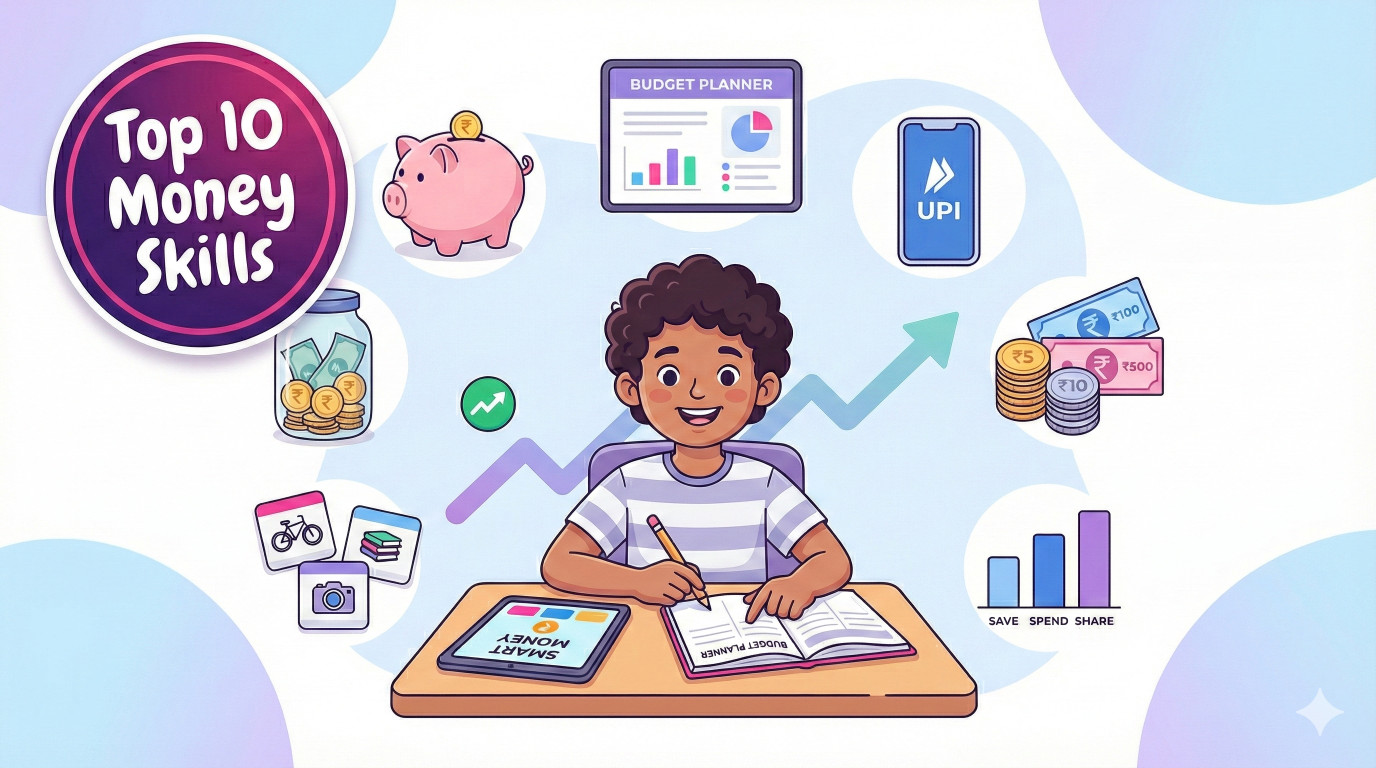
Here are the Top 10 essential money skills every child should learn before turning 15—skills that build confidence, independence, and lifelong financial success.
1. Understanding the Value of Money
Before anything else, children must understand what money is, why it matters, and how it is earned.
They should learn:
- Money comes from effort or value creation
- Parents earn money by working
- Money is a limited resource
This builds respect for money and reduces careless spending.
2. Savings Habit — “Pay Yourself First”
Saving is the strongest predictor of long-term financial stability.
Kids should learn:
- Save a portion of all money received
- Save before spending (not the other way around)
- Use separate jars/envelopes for goals
Teaching saving early builds discipline and delayed gratification.
3. Budgeting Basics
Budgeting helps kids learn how to plan, prioritize, and balance wants vs. needs.
By age 15, a child should know how to:
- Create a simple budget
- Allocate money to spending, saving, giving
- Track income and expenses
- Stick to a plan
Budgeting builds decision-making and reduces impulse spending.
4. Setting Short-Term & Long-Term Goals
Goal-setting helps children understand that money can create future possibilities.
Examples:
- Short-term: Buying a toy, book, or game
- Long-term: Bicycle, gadget, school trip
Learning how to save toward goals builds patience and motivation.
5. Smart Spending — Needs vs. Wants
This is one of the most important money skills.
Children must learn how to identify:
Needs = essential things (food, clothing, school supplies)
Wants = non-essential desires (chips, games, toys)
This simple concept can prevent overspending for life.
6. Basics of Earning Money
By age 15, kids should understand:
- How people earn money
- Different types of work
- Simple ways they can earn (chores, projects, small tasks)
- The importance of hard work and responsibility
Earning helps them value money deeply and use it wisely.
7. Banking Basics — Accounts, Deposits & Interest
Even if kids don’t operate a real bank account, they should understand:
- What a savings account is
- What interest means
- How digital payments work
- Basics of UPI, debit cards, and online banking safety
These skills prepare them for real-world financial systems.
8. Digital Money Safety
In today’s world, kids interact with digital money earlier than ever.
They must learn:
- How UPI, QR codes, and mobile wallets work
- Online safety rules
- Avoiding scams, fraud, and unsafe apps
- Why they should never share passwords or OTPs
This is a critical 2026 skill.
9. Basics of Investing
By age 15, children should know:
- What investment means
- Difference between saving vs. investing
- Simple concepts like compounding, risk, and growth
- Why investing early builds wealth
This builds a strong financial foundation for adulthood.
10. Giving, Sharing & Social Responsibility
Money education isn’t only about wealth—it’s about values.
Children should learn:
- The joy of giving
- Helping others
- Managing money with empathy and responsibility
This builds emotional intelligence and a healthy money mindset.
In Summary
Financial literacy is one of the greatest gifts parents can give their children. The earlier they learn, the
better they manage money, make decisions, and prepare for future opportunities.
Platforms like FiinBuddy make it easier by offering
fun, interactive, and age-appropriate lessons that turn complicated money concepts into simple learning
moments for kids.

 Launch your Graphy