There are no items in your cart
Add More
Add More
| Item Details | Price | ||
|---|---|---|---|

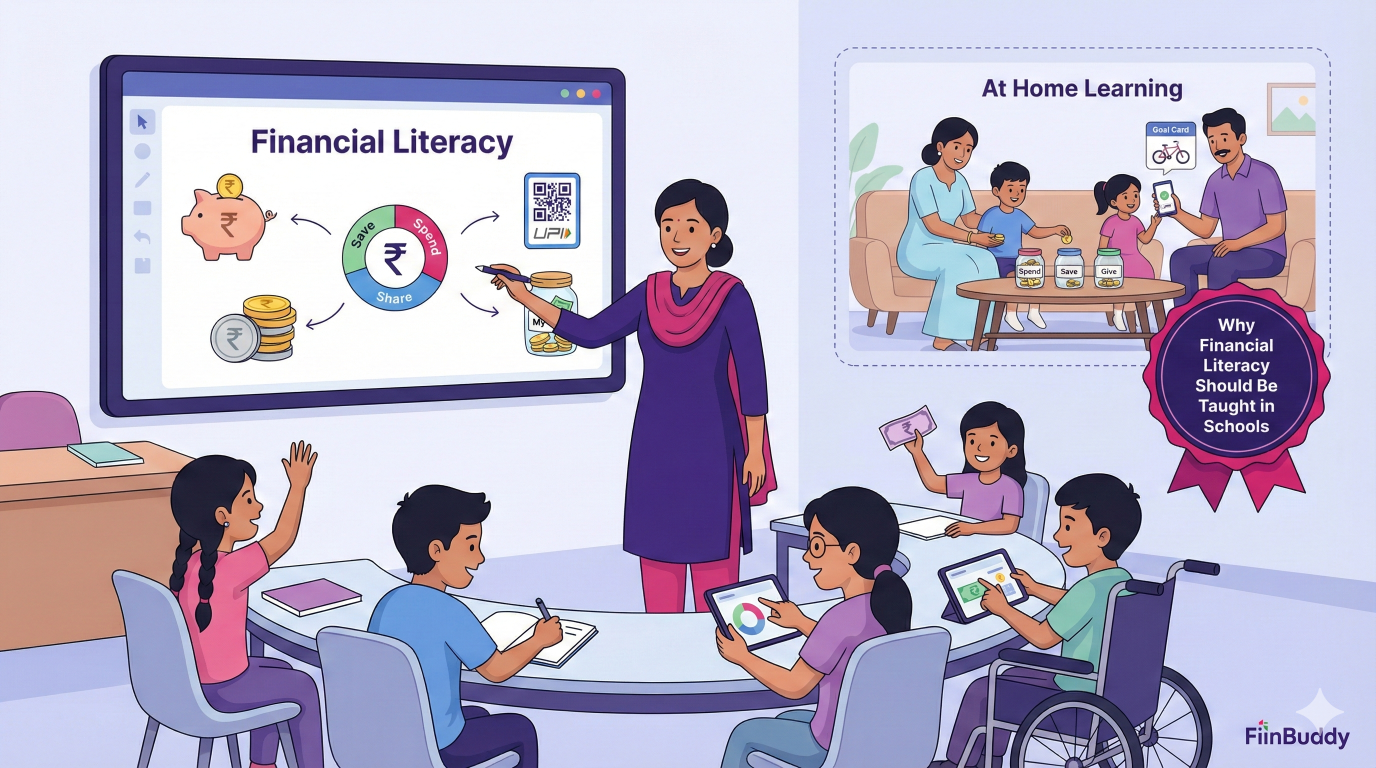
In today’s fast-changing financial world, children learn to swipe before they learn to save. They see parents using UPI, QR codes, credit cards, and online shopping long before they understand how money works. Yet, most schools still don’t teach financial literacy as a subject.
This creates a major learning gap—and parents often struggle with where to start.
This blog explores why schools must teach financial literacy, and how parents can fill the gap until education systems catch up.
Kids spend 12–15 years in school but rarely learn about earning, saving, budgeting, banking, digital payments, or investing basics. These skills directly affect real life far more than many academic subjects. Financial literacy should be treated like math or science—a fundamental skill.
Studies show that children develop money habits—saving, spending, self-control—by age 7. Teaching concepts early helps kids build discipline, decision-making, and financial confidence.
Kids see UPI, QR codes, wallets, and online purchases daily. Yet they rarely understand:
Financial literacy reduces bad debt, improves saving habits, builds investing discipline, and boosts financial confidence. Early teaching leads to healthier adults.
Kids who understand money also learn generosity, ethical spending, sustainability, and social responsibility. This helps shape thoughtful, responsible future citizens.
Schools face challenges such as overloaded curriculum, lack of trained teachers, absence of standardized financial modules, and the assumption that parents will teach money skills at home. This leads to a massive real-life skill gap.
Use simple moments—grocery trips, bill payments, UPI transactions—to explain where money comes from and how decisions are made.
Give kids small money to manage. Allow earning through chores, tasks, or small projects. Build accountability with “Spend–Save–Share” jars.
Kids should save for toys, books, outings, or bigger goals like bicycles. Goal-based saving builds patience and focus.
A notebook, diary, or simple app can teach awareness and discipline. Tracking is the first step to good money habits.
Kids must know about scams, suspicious links, password safety, and responsible UPI use. Digital safety is a critical 2026 skill.
FiinBuddy makes financial learning simple, fun, and practical with age-appropriate, story-based lessons designed for ages 5–15. Parents can start early even if schools haven’t integrated financial literacy yet.
Financial literacy is not just another subject—it’s a life skill that shapes a child’s confidence, habits, and decisions. The earlier children learn about money, the better prepared they are for the future.
Children become smarter decision-makers, better savers, responsible spenders, and financially confident adults. And that is the foundation of a strong future.
Give your child the gift of financial confidence with fun, story-based lessons designed for ages 5–15. Build strong money habits early—one lesson at a time.
Start Learning Now Launch your Graphy